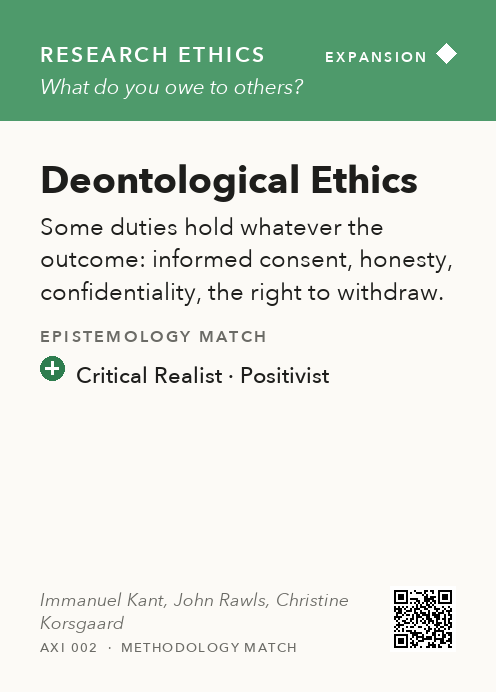
Some duties hold whatever the outcome: informed consent, honesty, confidentiality, the right to withdraw.
Key thinkers: Immanuel Kant, John Rawls, Christine Korsgaard
The longer story
Kant had an insight: some things are wrong even if they produce good outcomes. You shouldn't lie even if lying would help. This is deontological ethics—duty-based, rule-following, principled. It's why informed consent is non-negotiable, why confidentiality matters absolutely, why participants can withdraw whenever they want. The rules protect people from researchers' good intentions going wrong. The challenge comes when rules conflict, or when rigid rule-following seems to miss the point. But having lines you won't cross, regardless of circumstances, is what separates ethical research from 'whatever works.'