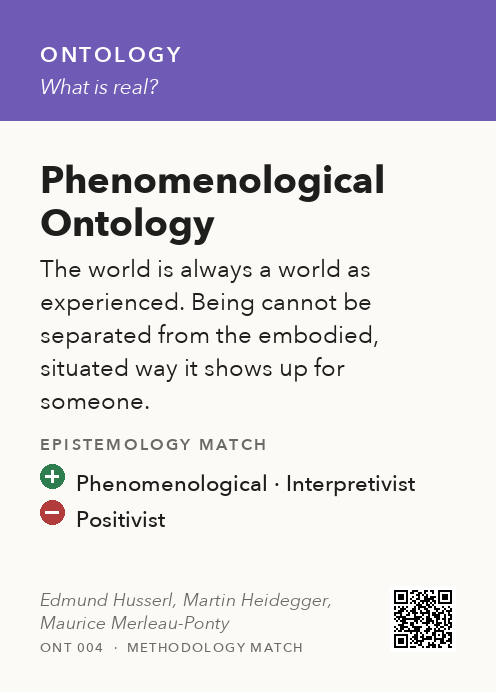
The world is always a world as experienced. Being cannot be separated from the embodied, situated way it shows up for someone.
- +Fits Phenomenological Epistemology, Interpretivist Epistemology
- –Tension with Positivist Epistemology
Key thinkers: Edmund Husserl, Martin Heidegger, Maurice Merleau-Ponty
The longer story
Phenomenological ontology makes a radical move: it says the world as experienced is the primary reality. Not molecules, not social structures—lived experience itself. Husserl called this the 'lifeworld.' What does it feel like to be absorbed in making something? What's the texture of anxiety before a performance? These aren't secondary questions about something else; they're the main event. This isn't solipsism—other people's experiences are real too. But it means your starting point is consciousness and its objects, not external reality you infer from behind experience. If you want to understand creative practice from the inside, this is your ontology.